Configuration decisions
Choose the format for the job.
Batch size and working capacity
Compare the documented working capacity and operating limits for organizing breading. Allow for loading, unloading and cleaning between batches; category images do not establish output.
Operating format and included components
Confirm the controls, attachments, guards and included components offered on the exact listing. Check what is supplied, what is optional and compatibility before ordering.
Measure twice. Choose once.
Fit means more than equipment width.
Exterior & operating footprint
Confirm overall dimensions, installed height, working clearance and access for loading and cleaning. Use the exact model’s dimensional drawing and installation instructions.
Capacity & access
Verify usable batch capacity, ingredient limits and the actual working configuration for the exact model. Confirm the actual model’s usable configuration rather than relying on the category name.
Doorway & delivery route
Measure entrances, corridors, turns, stairs and elevators. Obtain packaged dimensions and weight as well as installed dimensions. Confirm delivery and placement arrangements before ordering.
Electrical supply & receptacle
Check the exact model’s voltage, frequency, phase, rated current, plug and circuit requirements against the site supply and installation manual.
Ventilation & installation space
Confirm intake and discharge locations, required clearances and ambient limits. Preserve access for cleaning and service. An illustrative image does not establish installation clearance.
Connections & cleaning access
Check any specified connections for the actual model. Plan access for disassembly and cleaning, and use qualified installation support where required.
Capacity, output & included components
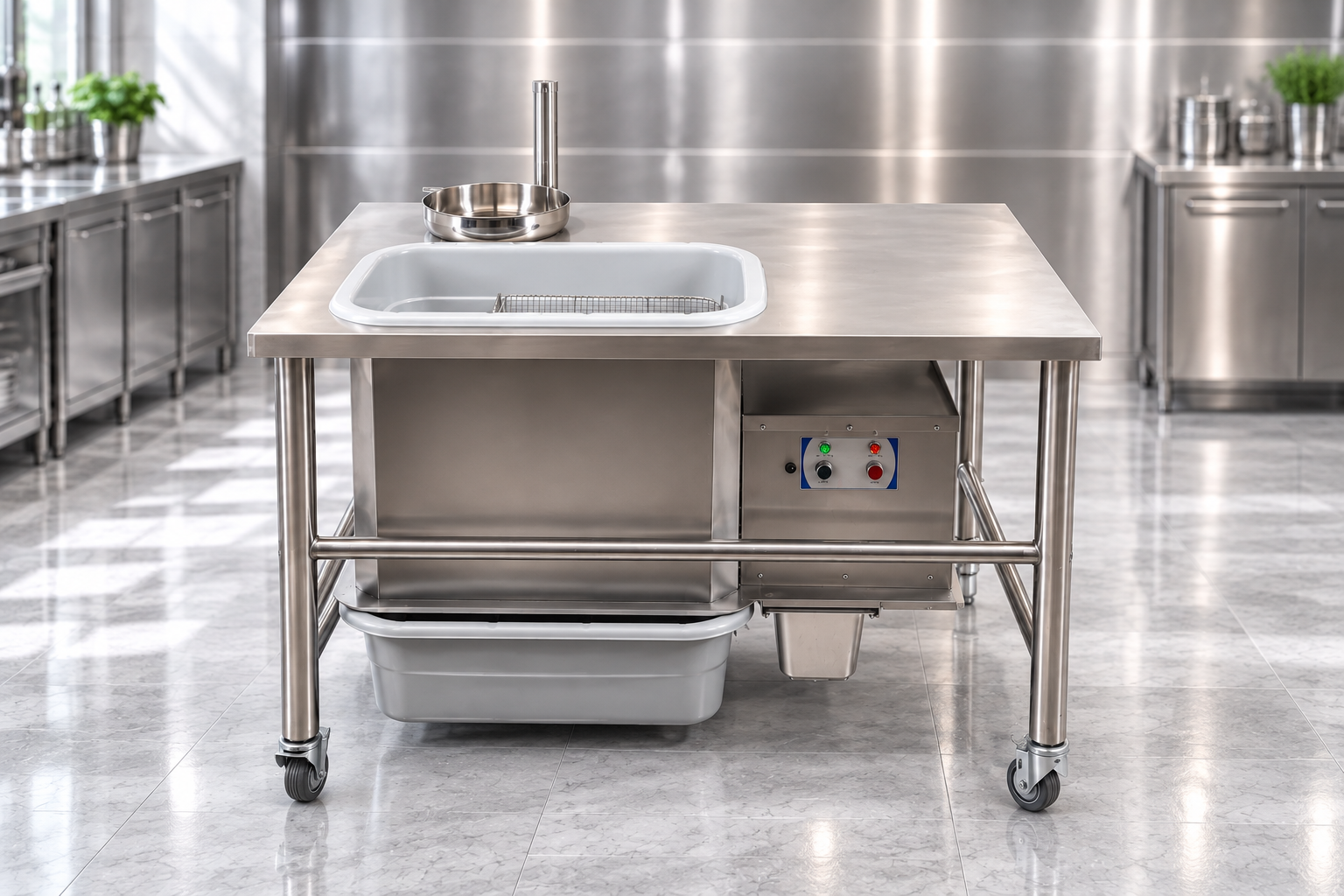
Breading Stations for organizing breading. Confirm included attachments, containers, guards, accessories and any required connection components on the actual listing. Read the exact listing and manufacturer documents before comparing models.
Legs, levelling & installed height
Check supplied legs or feet, complete installed height and the manufacturer’s levelling, mounting and movement instructions. Confirm any separate support or mounting components.
Operation & ownership
Look beyond the purchase price.
Energy & operating information
Compare documented energy information and operating conditions for the exact model. Review fuel or electrical input and the operating conditions behind output or capacity figures. Compare like food preparation tasks under the same documented conditions.
Cleaning & maintenance
Review the exact manual’s cleaning, sanitizing, surface care and service intervals. Plan access to food-contact areas and removable parts, and use the specified products and procedures.
Commercial approvals & suitability
Verify certification and intended use on the actual model’s documentation. Confirm suitability for the proposed application where required; do not assume collection-wide approval.
Warranty, parts & Canadian service
Confirm current Canadian warranty terms, exclusions, installation obligations, claim procedures and local service arrangements for the exact model. Ask about parts and consumables before ordering.
Before ordering
Compare the exact models.
Use current product information and manufacturer documents for every shortlisted model. This checklist is a decision aid; it does not assign specifications to the collection.
Your category checklist
- Ingredient and production task
- Documented working capacity and duty limits
- Operating format and included components
- Electrical supply and working clearances
- Cleaning, delivery access and current support terms
Related equipment
Complete the workspace.
Explore the existing collections for complementary preparation, support and storage equipment.
Frequently asked questions
A few questions before ordering.
What does a commercial breading station do?
It provides an organized commercial workspace for flouring, seasoning and
breading food products before frying or cooking, helping improve workflow and consistency.
Are commercial breading stations suitable for daily use?
Yes. Commercial breading stations are designed for bakeries, restaurants, cafes,
delis, supermarkets and institutional kitchens that slice bread regularly.
What products can be prepared at a breading station?
Breading stations can be used for chicken, fish, seafood, pork, cutlets,
vegetables and other suitable products. Follow your food-safety procedures
and keep raw and prepared products properly separated.
Do breading stations include ingredient pans?
Many models include removable pans or containers, but configurations vary.
Confirm the number, size and type of pans included before ordering.
What should I confirm before buying?
Confirm pan capacity, work-surface dimensions, storage, mobility, overall size
and cleaning requirements before selecting a model.
How should a commercial breading station be cleaned?
Remove ingredient pans and follow approved sanitation procedures. Clean and
sanitize all food-contact surfaces, shelves and handles after use, paying close
attention to areas exposed to raw proteins and breading residue.
Do you ship commercial breading stations across Canada?
Yes. Continental Restaurant Equipment supplies commercial food-preparation
equipment across Canada. Select a breading station that matches your menu,
production volume, available space and workflow requirements.
Continental Restaurant Equipment
Let’s choose the right equipment.
Share your shortlisted models, service demand and site measurements. We can help identify the information to confirm before you order.